
HYDROSTATIC TESTING · MIAMI-DADE
Hydro tests that keep your cylinders in service
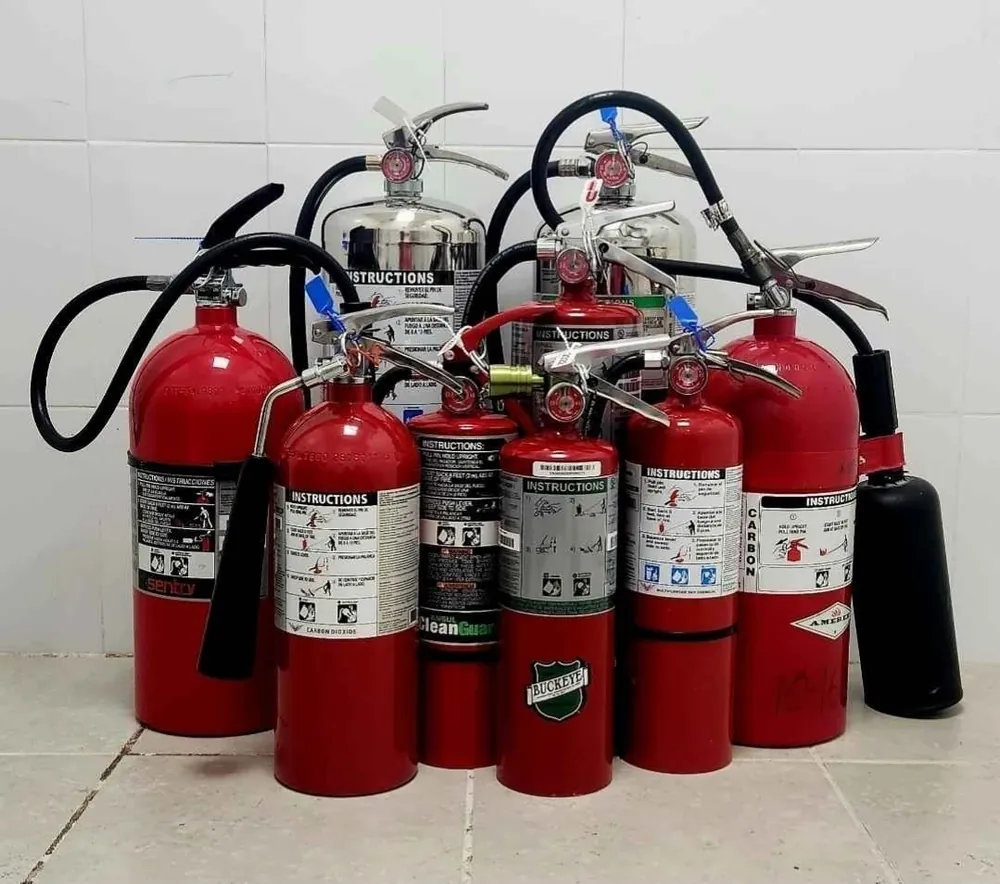
Every extinguisher cylinder has to pass a pressure test every 5 or 12 years. We track each unit's date, test it, and put it back on the wall with a new label.
- CO2 · WATER · CLASS K
- 5 YRCO2 · WATER · CLASS K
- DRY CHEMICAL · CLEAN AGENT
- 12 YRDRY CHEMICAL · CLEAN AGENT
¿Habla español? Llámenos al (786) 657-6107.
THE SHORT ANSWER
How often does a fire extinguisher need hydrostatic testing?
Under NFPA 10, CO2, water, foam and wet chemical (Class K) extinguishers need a hydrostatic test every 5 years. Stored-pressure dry chemical and clean agent (halogenated) extinguishers are tested every 12 years. The interval counts from the date the unit was made or last tested, which is stamped or labeled on the cylinder.
Rules vary by city and building, and your local fire marshal has the final say. We'll tell you what your inspector will look for.
THE PROBLEM
Why hydro tests get missed
The annual tag gets all the attention. The hydro date is easy to overlook until an inspector finds it.
- 01
The date is hidden
Hydro dates are stamped on the cylinder neck or on a small label, not on the annual tag most people read.
- 02
Two different schedules
A building with ABC, CO2 and Class K units has 5- and 12-year cylinders mixed together.
- 03
Inspectors check the label
An extinguisher past its hydro date is out of service, even with a current annual tag.
- 04
A failed cylinder stays on the wall
Cylinders that are corroded or damaged can rupture under pressure. Testing is how they get caught.
THE SOLUTION
How hydrostatic testing works
- 01
Dates tracked per unit
Your record shows each cylinder's last hydro date, so we flag them before they're due.
- 02
Emptied and taken apart
The extinguisher is discharged, the valve removed, and the cylinder inspected inside and out.
- 03
Pressure tested
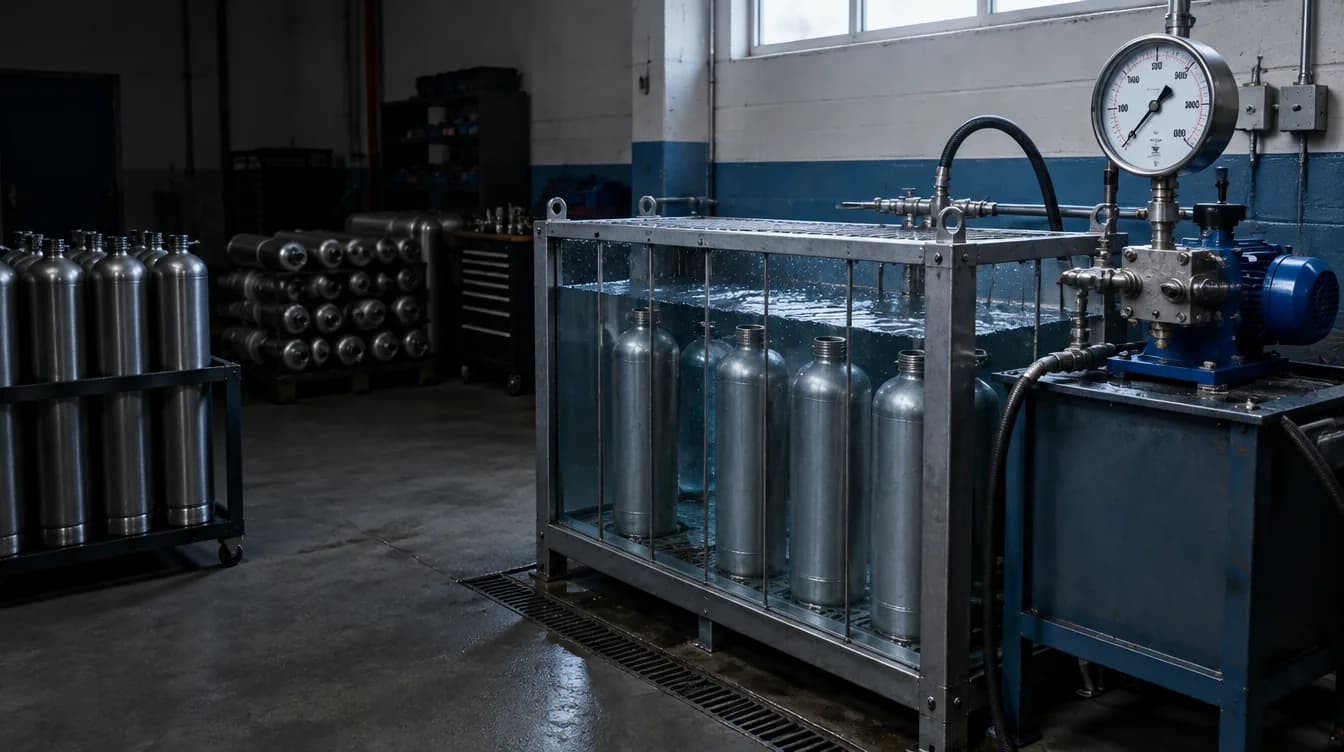
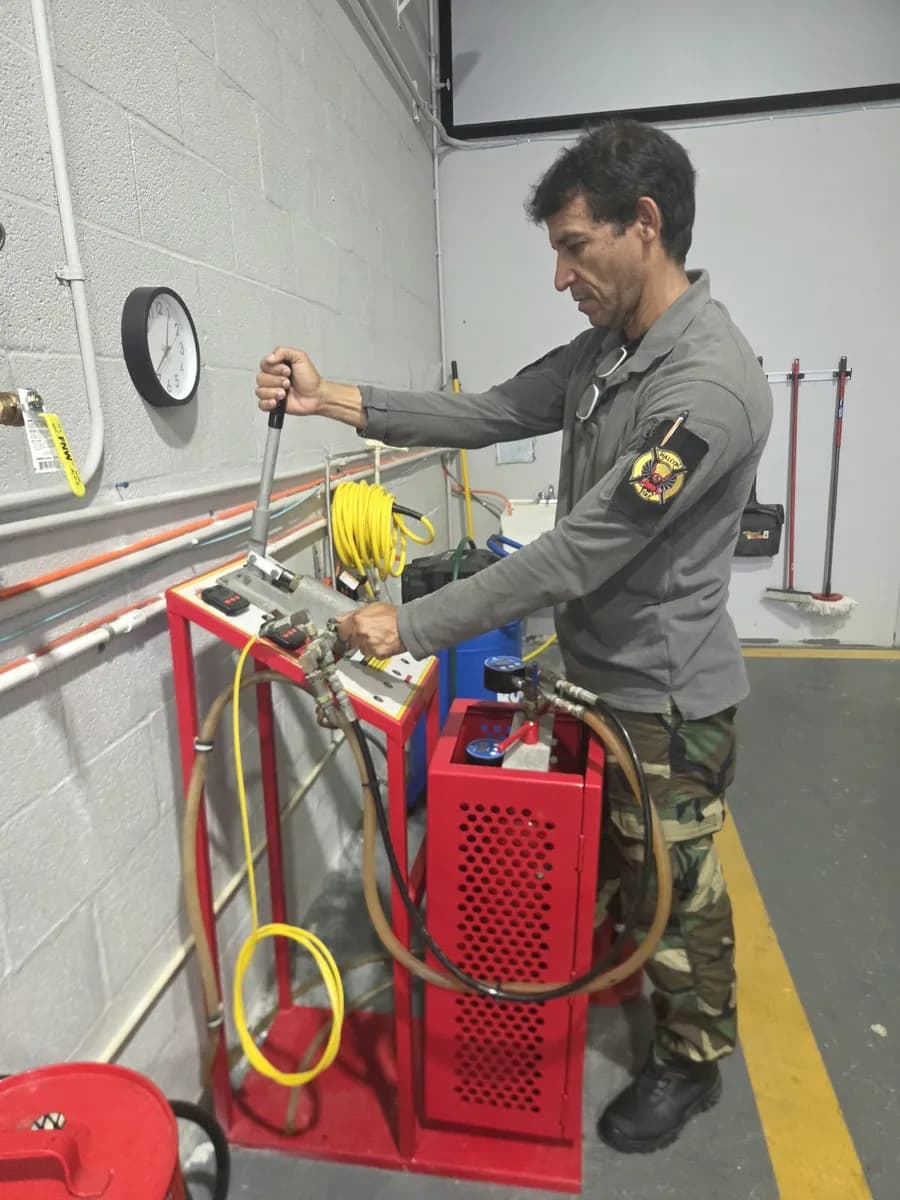
The cylinder is filled with water and pressurized to its test pressure in a protective cage.
- 04
Labeled or condemned
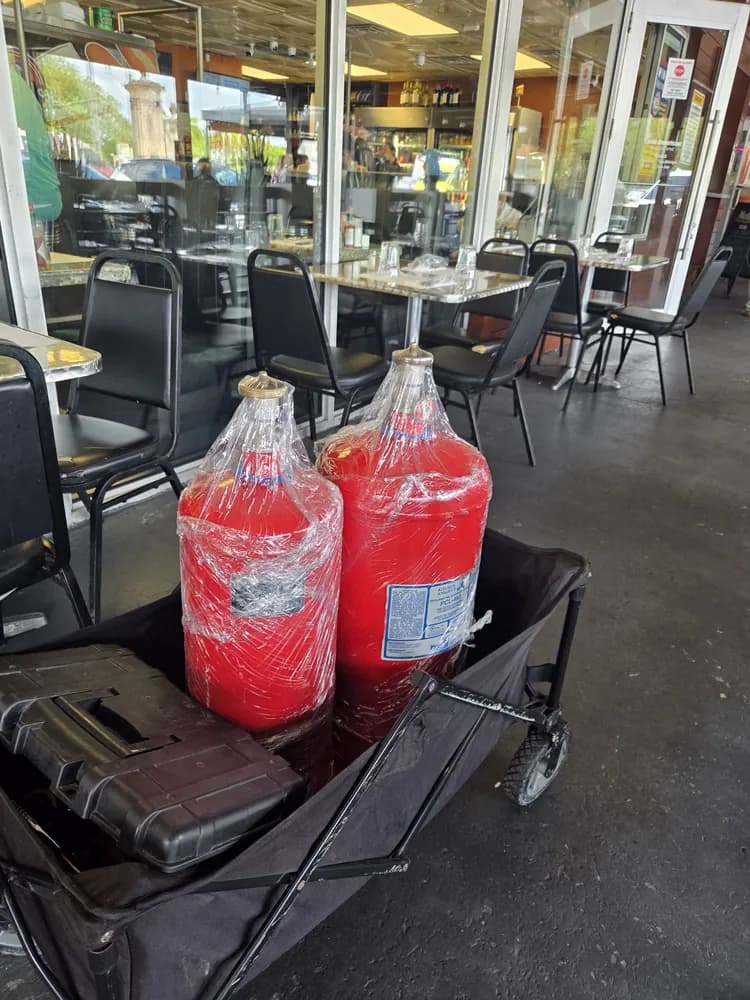
Cylinders that pass are dried, refilled, labeled and returned. Cylinders that fail are condemned and replaced.
CHECKLIST
Hydrostatic test intervals by extinguisher type
The NFPA 10 schedule, counted from the year made or the last hydro test on the cylinder.
EN ESPAÑOL
Prueba hidrostática de extintores
Los extintores de CO2, agua y clase K necesitan prueba hidrostática cada 5 años; los de polvo químico seco y agente limpio, cada 12 años.
Halcon Fire lleva el control de las fechas de cada cilindro en Miami-Dade y el sur de la Florida, hace la prueba y lo devuelve etiquetado.
Llame al (786) 657-6107QUESTIONS
Hydro testing questions we hear
What is a fire extinguisher hydrostatic test?
A pressure test of the extinguisher's cylinder. It's emptied, filled with water and pressurized above its normal working pressure to make sure it won't leak or burst when it's used.
How do I know when my extinguisher was last hydro tested?
Look for a date stamped into the cylinder near the neck (common on CO2 units) or a hydrostatic test label on the cylinder. If there's neither, count from the manufacture date on the label.
What happens if a cylinder fails the hydro test?
It's condemned and can't go back into service. We replace it with a new extinguisher of the right type and size.
Is six-year maintenance the same as a hydrostatic test?
No. Six-year maintenance empties and inspects a stored-pressure dry chemical unit inside. The hydrostatic test pressure-tests the cylinder itself, every 12 years for that type.
Do disposable extinguishers need hydro testing?
No. Non-rechargeable extinguishers aren't hydro tested; they're removed from service 12 years after they were made.