
COMPLIANCE · FLORIDA FIRE CODE
Inspection-ready every day of the year
Florida's fire code puts every extinguisher and kitchen system on a calendar. We keep that calendar, the tags and the paperwork, so a fire marshal visit is a formality.
- Standards
- NFPA 10 · 96THE STANDARDS WE WORK TO
- Records
- 1 RECORDFOR EVERY UNIT
¿Habla español? Llámenos al (786) 657-6107.
THE SHORT ANSWER
What does fire extinguisher compliance mean in Florida?
Florida's fire code adopts the NFPA standards, which give every extinguisher and kitchen fire system a service calendar: a monthly check by your staff, a yearly inspection by a company licensed by the State Fire Marshal, maintenance and hydrostatic tests every few years, and kitchen hood systems every six months. Compliance means each of those is current, tagged and on record when the fire marshal walks in.
Local rules can add to this, and your fire marshal has the final say. We'll tell you what your inspector will look for.
THE CALENDAR
Fire safety compliance calendar
Every item your extinguishers and kitchen systems need, who is allowed to do it, and how often.
INSPECTION DAY
What the fire marshal checks
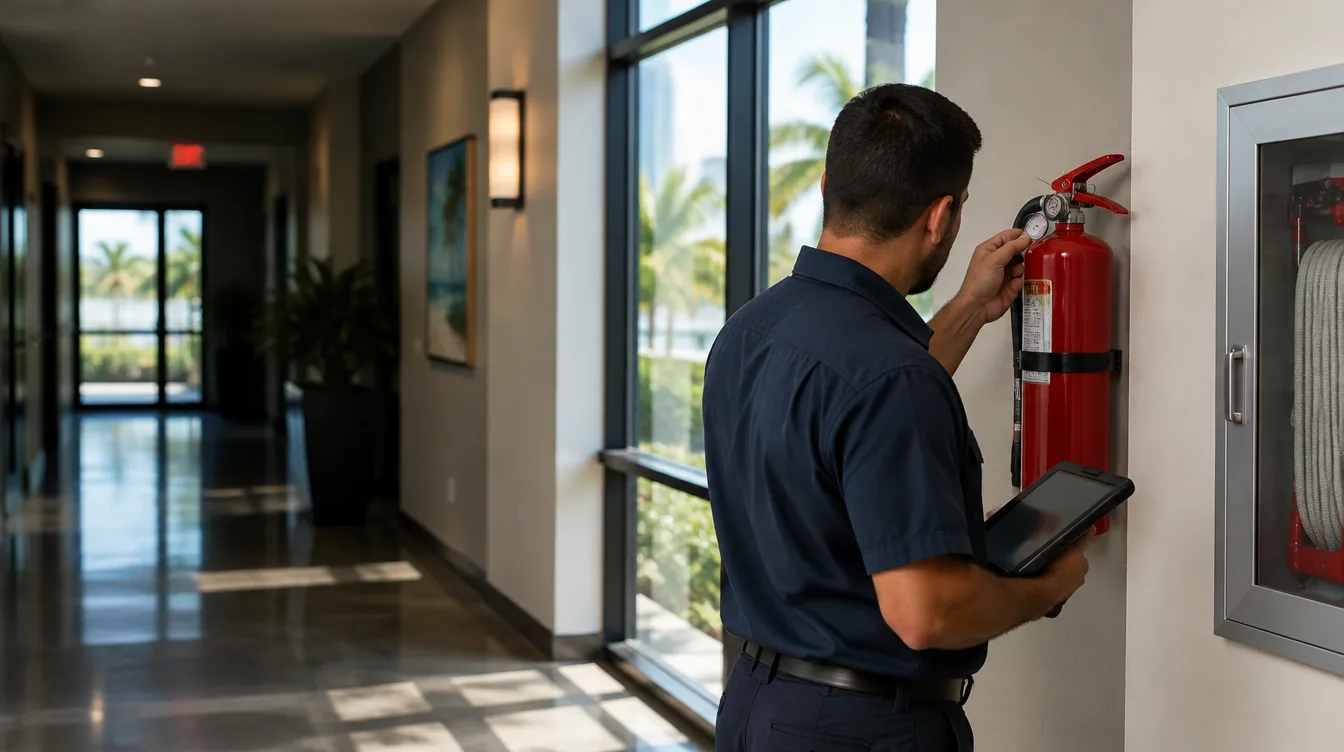
An inspector walks your space and looks at each extinguisher the same way. These six things decide whether you pass.
- 01
A current tag
A service tag from the last 12 months on every extinguisher, with the month and year punched out.
- 02
Mounted at the right height
Top no higher than 5 feet for units of 40 pounds or less, and the bottom at least 4 inches off the floor.
- 03
Easy to see and reach
Not blocked by boxes, carts or doors, with a sign wherever a unit isn't in plain view.
- 04
Ready to use
Gauge in the green, pin and tamper seal in place, hose clear, no dents or corrosion.
- 05
The right class for the hazard
Class K at the cooking line, CO2 or clean agent near electrical equipment.
- 06
Records on hand
Proof of monthly checks, plus the latest annual, hydrostatic and hood system reports.
FLORIDA RULE 69A-21
What a legal service tag shows
Florida sets exactly what goes on an extinguisher service tag, and a new tag goes on every time the unit is serviced. Tap each part of the sample tag to see what the rule requires.
HALCON FIRE LLC
16155 SW 117th Ave, Unit B-18, Miami, FL 33177
(786) 657-6107
SERIAL NO.
SN 0000000
SERVICE
- Annual
- Recharge
- 6-year
- Hydro
TYPE
ABC dry chemical · 10 lb
MONTH / YEAR
- J
- F
- M
- A
- M
- J
- J
- A
- S
- O
- N
- D
- 26
- 27
- 28
- 29
- 30
SERVICED BY
Sample Technician
Permit No. 00000
Printed on the front center of the tag. A tag without the service company's name, street address and phone number doesn't meet Florida's rule.
Ties the tag to that one unit. The invoice has to list the same serial numbers, so tags can't be moved from one extinguisher to another.
Annual maintenance, recharge, six-year maintenance or hydrostatic test, marked for the work actually done that day.
ABC, Class K, CO2 and so on, so an inspector can see the right extinguisher is in the right place.
Punched, not written, so the date can't be changed. If the punch is more than 12 months old, the extinguisher is overdue.
The full name of the person who did the work (initials don't count) and their State Fire Marshal permit number. Only that person may fill out and attach the tag.
The invoice has to list each unit's serial number and carry the dealer's license number. If a tag is missing any of this, ask your vendor why.
QUICK CHECK
Is your extinguisher due?
Enter the month on your last tag and see what's due next.
Enter the month on your last service tag to see what's due and when.
An estimate from NFPA 10 and 17A schedules. Your tag and your fire marshal have the final say.
HOW WE KEEP YOU COMPLIANT
Your records, always ready
- 01
Map
Every extinguisher and kitchen system gets a record: location, type, serial number and every due date.
- 02
Tag
Each service is tagged to Florida's rules and logged the same day.
- 03
Remind
You hear from us before anything comes due, not after the inspector finds it.
- 04
Report
A report per site you can hand the fire marshal, your board or your insurer.
Sample record. Yours lists every unit at every site.
BY INDUSTRY
Compliance for your kind of business
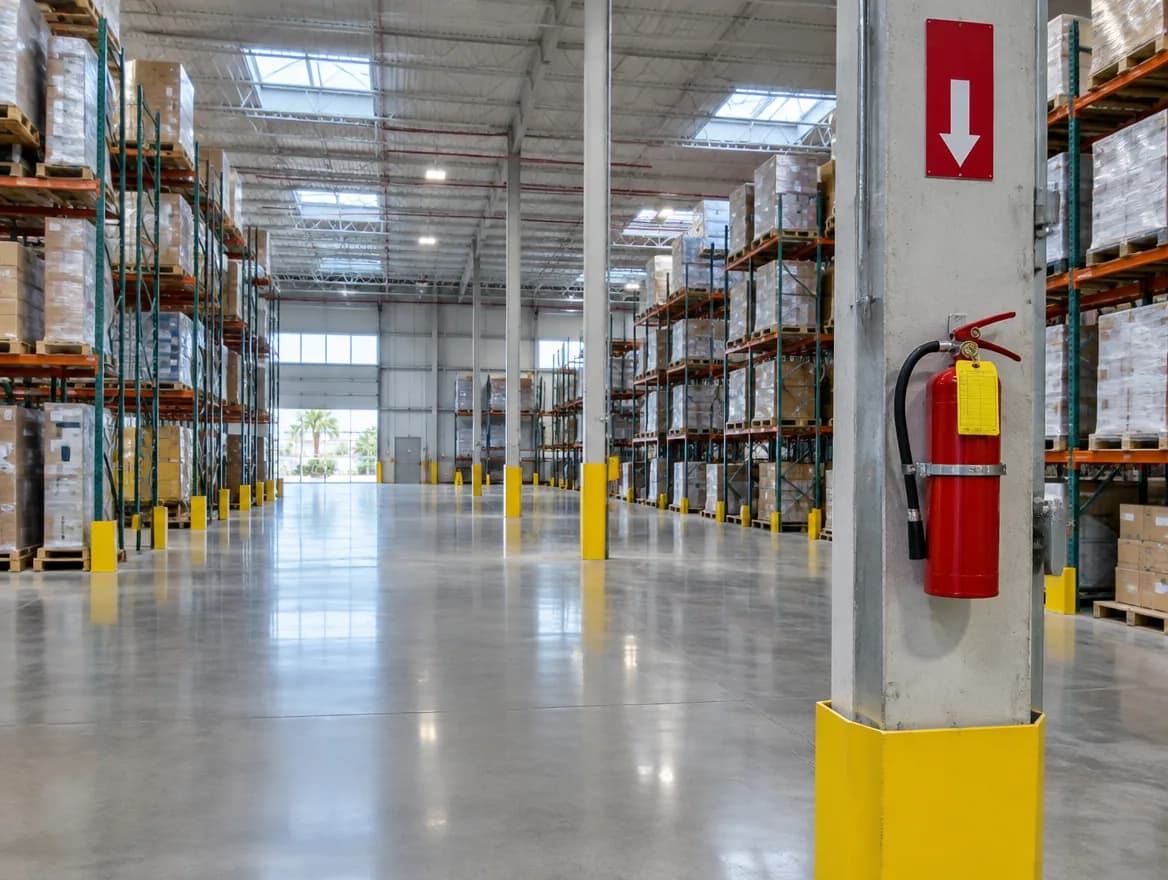
Each industry has its own checklist. Pick yours.


QUESTIONS
Compliance questions we hear
Who is allowed to inspect fire extinguishers in Florida?
Your staff can do the monthly visual check. Annual maintenance, recharging, hydrostatic testing and kitchen system service have to be done by a fire equipment dealer licensed by the Florida State Fire Marshal, through a technician who holds a State Fire Marshal permit. The technician's name and permit number go on every tag.
What happens if I fail a fire inspection?
Usually the inspector writes up the violations and gives you a deadline to correct them before a re-inspection. Fees and fines depend on your city or county. Most violations, like expired tags, a missing Class K or a blocked extinguisher, can be fixed in one service visit.
What does the monthly extinguisher check involve?
A quick walk of every unit: it's in its place, visible and reachable, the gauge reads in the green, the pin and tamper seal are intact, there's no damage, and the tag is current. Record it on the tag or electronically. We'll show your staff how on our first visit.
What records should I keep for the fire marshal?
Keep proof of your monthly checks and your latest annual, hydrostatic and hood system reports where an inspector can see them. We keep every report in your digital record, so you can pull up past years at any time.
How often does a kitchen hood suppression system need inspection?
Every six months by a licensed company, and again after any discharge before you cook. Hood and duct cleaning is separate and runs monthly to yearly depending on how much you cook, under NFPA 96.
Will you remind me when something is due?
Yes. Every unit's due dates are in your record and we reach out before anything comes due. Call (786) 657-6107 to set up a compliance review of your site.