
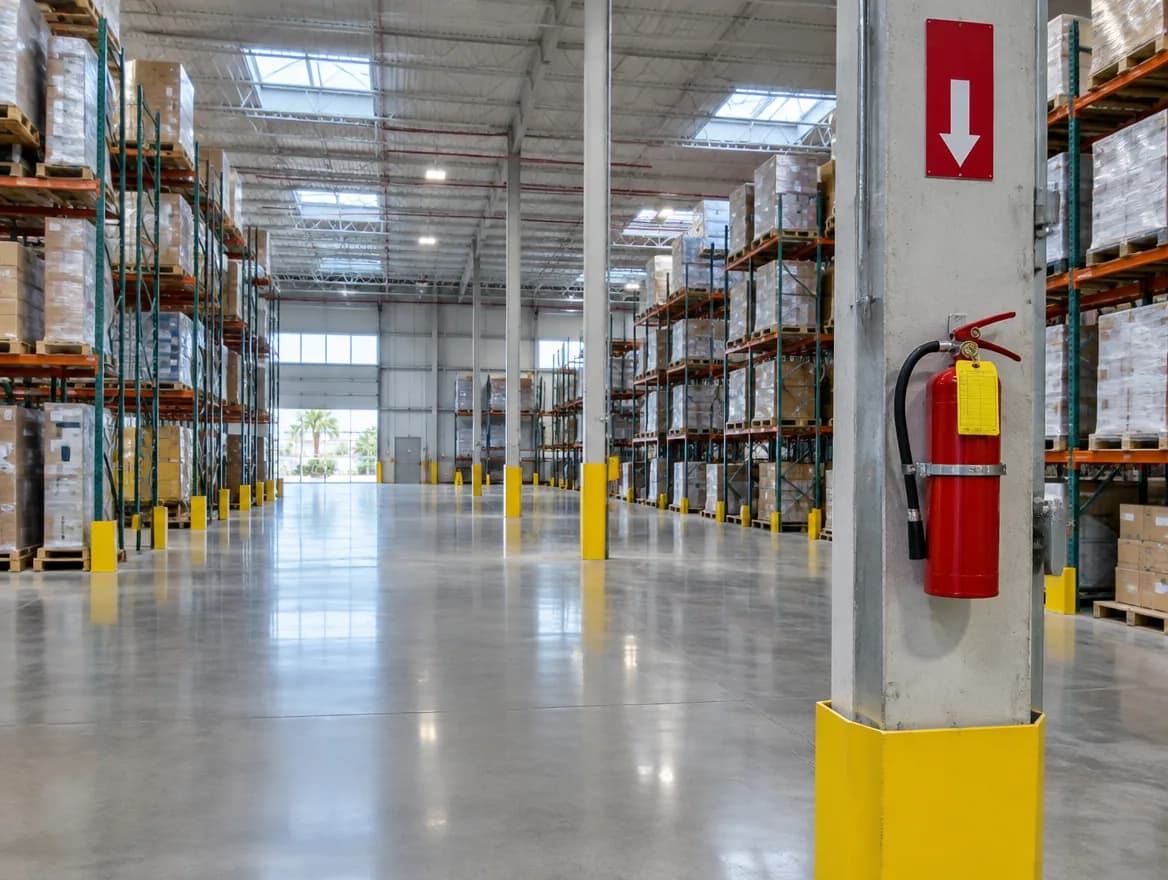
OFFICES & WAREHOUSES · SOUTH FLORIDA
Every unit on every floor, on schedule
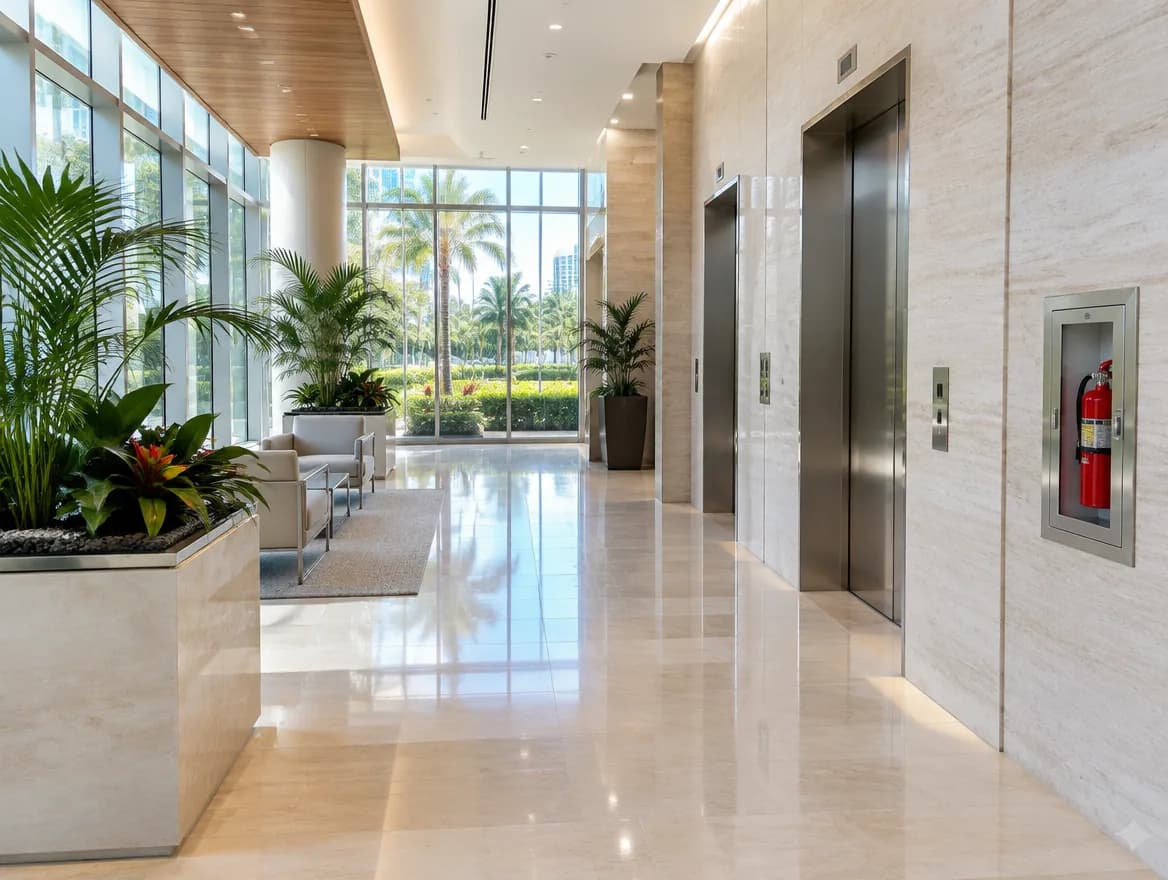
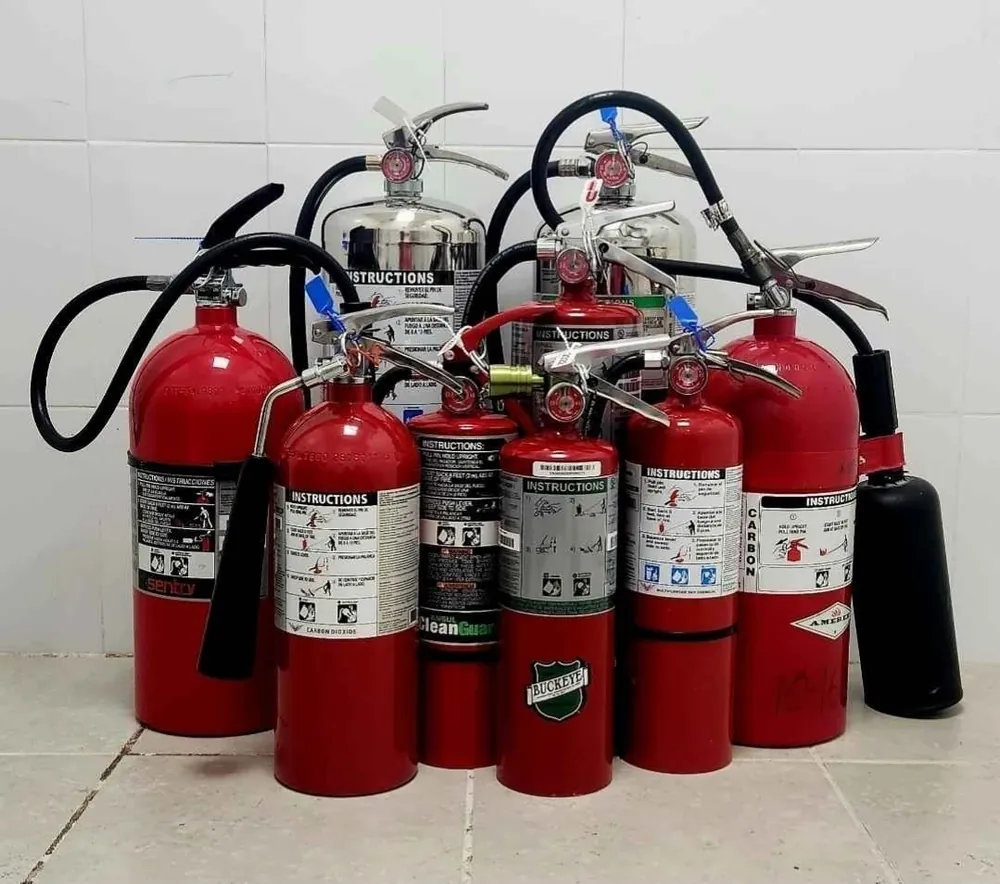
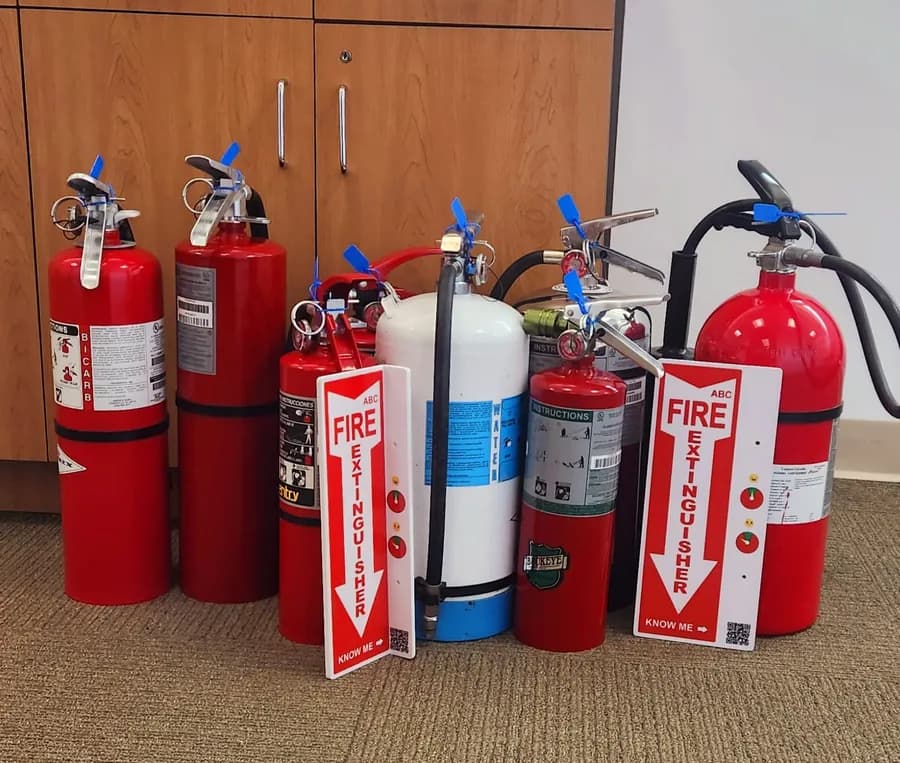
Annual inspection, tagging, recharge and hydrostatic testing for offices, warehouses and industrial sites, with a record of every extinguisher's location and due date.
- COMPLIANT SERVICE
- NFPA 10COMPLIANT SERVICE
- FOR EVERY UNIT
- 1 RECORDFOR EVERY UNIT
¿Habla español? Llámenos al (786) 657-6107.
THE SHORT ANSWER
How often do fire extinguishers need inspection in a Florida business?
Under NFPA 10, which Florida's fire code adopts, every portable extinguisher needs a monthly visual check by your staff and a yearly maintenance inspection by a licensed company, recorded on a tag. Stored-pressure dry chemical units also need internal maintenance every six years and a hydrostatic test every twelve; CO2 and water units are hydro tested every five years.
Rules vary by city and building, and your local fire marshal has the final say. We'll tell you what your inspector will look for.
THE PROBLEM
Why buildings fail extinguisher inspections
In a big building, extinguishers get moved, blocked, used and forgotten. Inspectors walk the floor and check every one.
- 01
Units missing or blocked
An extinguisher that walked off, or sits behind pallets, counts as missing. There are limits on how far anyone should walk to reach one.
- 02
Expired tags and overdue hydro tests
Annual tags lapse, and older cylinders reach their six-year maintenance or hydrostatic test date without anyone noticing.
- 03
The wrong type for the hazard
Server rooms, forklift charging, flammable storage and break-room kitchens each need the right class of extinguisher.
- 04
No records
When the inspector or your insurer asks for service records, a stack of old invoices doesn't cut it.
THE SOLUTION
One walkthrough, every unit accounted for
- 01
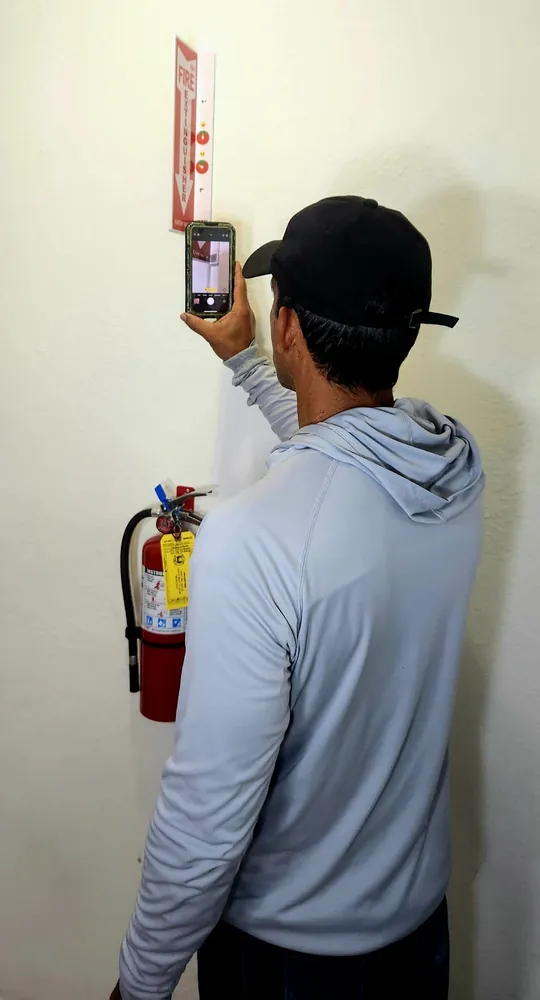
We map every unit
Each extinguisher's location, type and dates go into your digital record on the first visit.
- 02
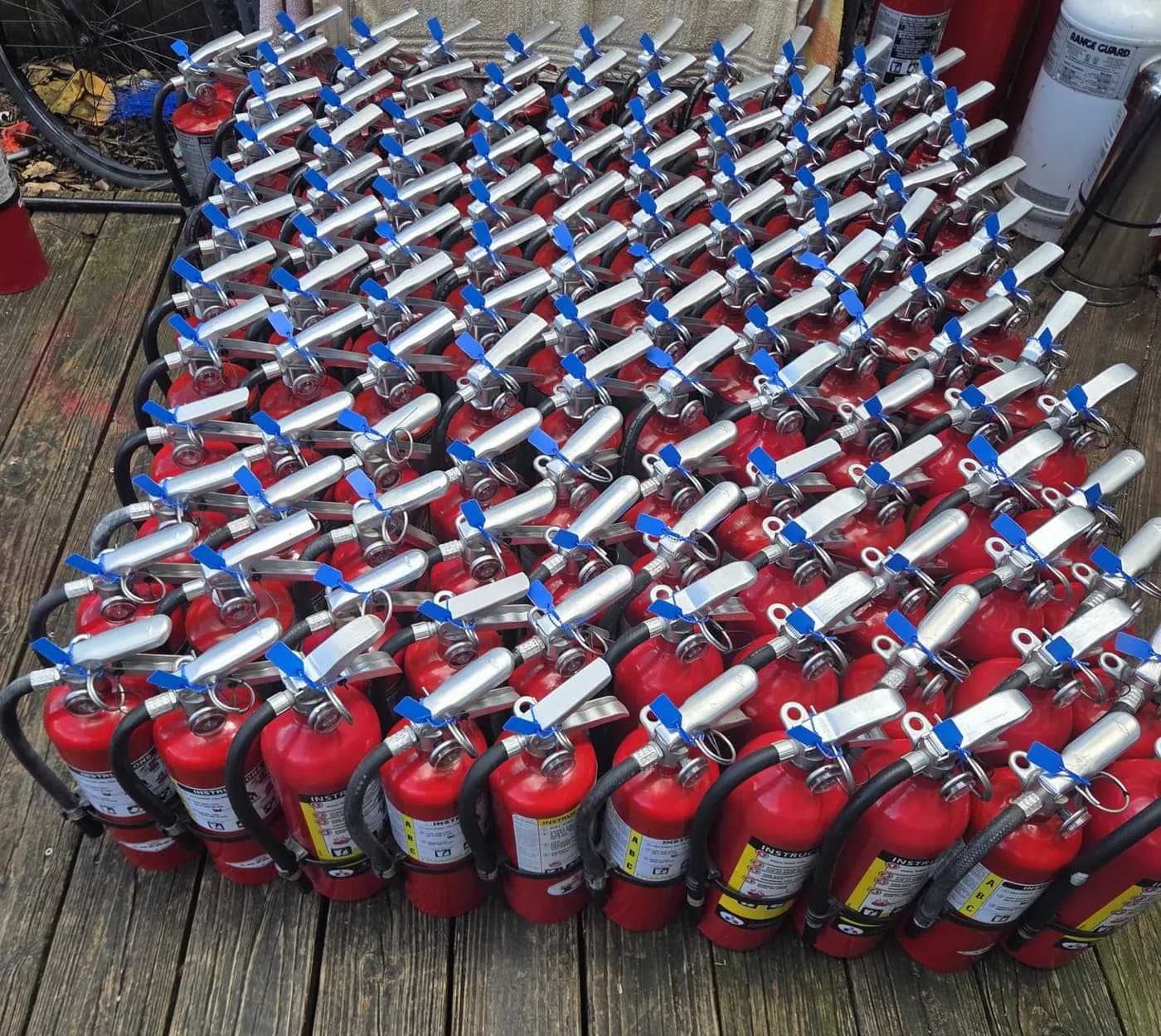
Inspect, tag and fix
Annual maintenance, recharge and replacement units on the same visit whenever possible, so you aren't waiting on a second trip.
- 03
Hydro and 6-year maintenance tracked
We flag cylinders due for internal maintenance or hydrostatic testing before they're overdue.
- 04
Reports and reminders
A report you can hand the inspector or your insurer, and reminders before anything comes due.
CHECKLIST
Office and warehouse extinguisher checklist
What NFPA 10 asks for and inspectors check in commercial buildings, and how often.
QUESTIONS
Facility managers ask us
How far apart do fire extinguishers need to be?
For ordinary Class A hazards like offices and storage, NFPA 10 says no one should have to walk more than 75 feet to reach an extinguisher. Areas with flammable liquids have shorter limits, 30 or 50 feet depending on the extinguisher. Your inspector applies the rule to your floor plan.
Who can do the annual extinguisher inspection?
Your staff can do the monthly visual check. The yearly maintenance has to be done by a company licensed by the Florida State Fire Marshal, and it's recorded on the tag on each unit.
What is hydrostatic testing?
A pressure test of the extinguisher's cylinder to make sure it won't fail when it's used. CO2 and water extinguishers are tested every five years, and most dry chemical extinguishers every twelve. Cylinders that don't pass are taken out of service.
Do you service multiple locations?
Yes. We keep one record across all your sites and can schedule them together, anywhere in Miami-Dade, South Florida and the Florida Keys.
Can you work around our hours?
Yes. We schedule around your shifts and deliveries, and we can work early or late so the floor keeps moving.